Wednesday, January 16, 2008

this explains everything


When there is so much to be known, when there are so many fields of knowledge in which the same words are used with different meanings, when every one knows a little about a great many things, it becomes increasingly difficult for anyone to know whether he knows what he is talking about or not. And when we do not know, or when we do not know enough, we tend always to substitute emotions for thoughts.


that would be t.s. eliot in "the perfect critic." personally, i've rejected the concept of "knowledge," long ago having moved on to "fun facts."

Saturday, January 12, 2008

This is like That


This is a photograph taken by Gjon Mili


This is a movie by the japanese art collective pikapika.

Similar, no? But I like the first one the best, of course.

Hey Old Guy


Diogenes of Sinope was an ancient Greek philosopher, who was one of the founders of Cynicism. Called "Socrates gone mad" by Plato, he lived in a wine barrel and promoted ideas of nihilism and animalism. Famously, when he was asked by Alexander the Great what he wanted most in the world, he replied, “For you to get out of my sunlight.” Seriously, though, he was pretty crazy--lots of defecating in public, etc.

side effects


The Stendhal Syndrome is a psychosomatic illness causing dizziness, confusion, rapid heartbeat, and even hallucinations provoked by an individual's exposure to art, usually when the piece is especially beautiful or there is a lot of it in one place. I tried to find a painting of Stendhal that might potentially induce the syndrome, but apparently he was kind of homely.

Ballet Mechanique


Here is a dadaist film directed by Fernand Leger, set to ballet music composed by Antheil. The This music is impossible to play in ful, and involves the use of found metal objects, like plane propellers.

Wasting Time


Found a new site, http://www.squareamerica.com/, good archive of found photographs. Check that shit out.

Tuesday, November 20, 2007

Justification


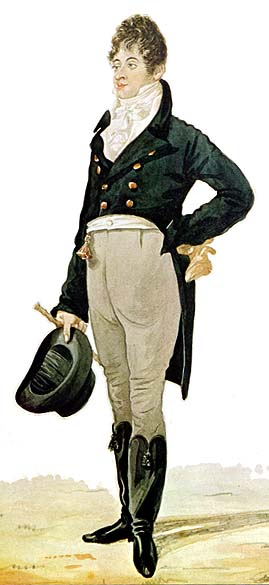
"And, certainly, to him Life itself was the first, the greatest of the arts, and for it all the other arts seemed to be but a preparation. Fashion, by which what is really fantastic becomes for a moment universal, and Dandyism, which, in its own way, is an attempt to assert the absolute modernity of beauty, had, of course, their fascination for him. His mode of dressing, and the particular styles that from time to time he affected, had their marked influence on the young exquisites of the Mayfair balls and Pall Mall club windows, who copied him in everything that he did, and tried to reproduce the accidental charm of his graceful, though to him only half-serious, fopperies."
Oscar Wilde, "The Picture of Dorian Gray" (1890).


The act of getting dressed in the morning is really a daily ritual of transubstantion.